|
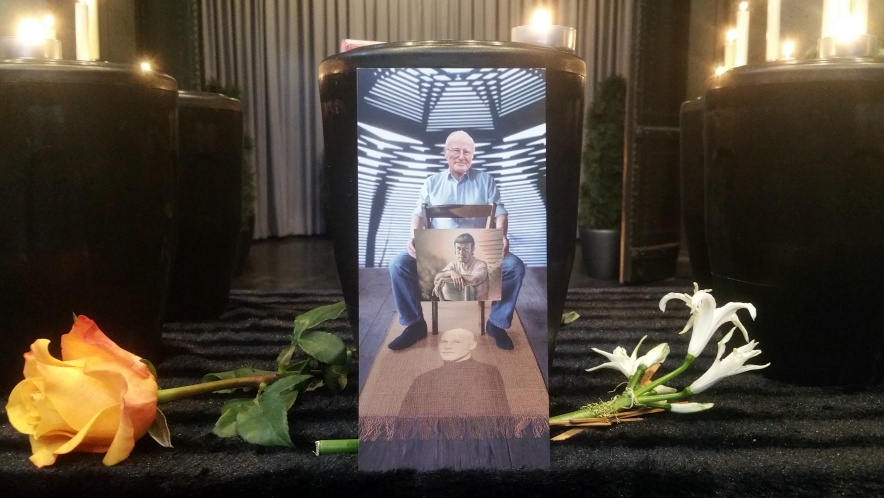
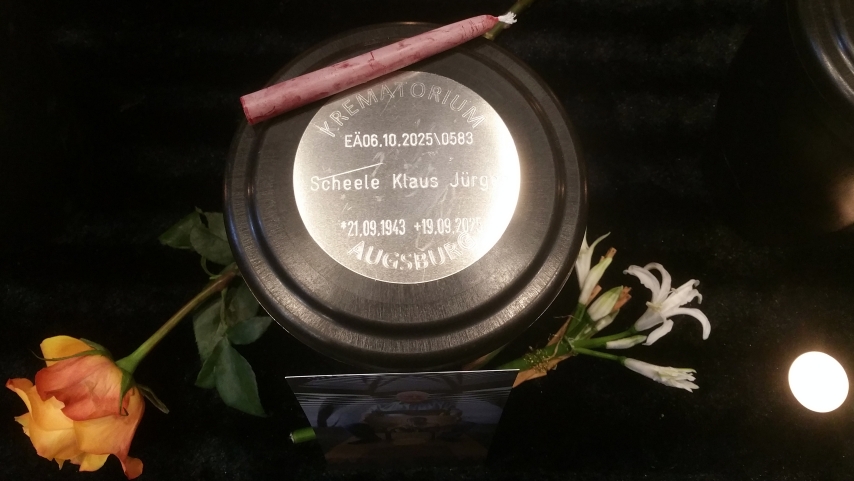
Laudatio in Memory of Claus Jürgen Hermann Scheele
We bid farewell to an artist whose work reached far beyond the boundaries of his studios: Claus Jürgen Hermann Scheele (September 21, 1943 – September 19, 2025).
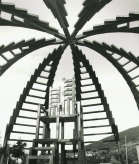
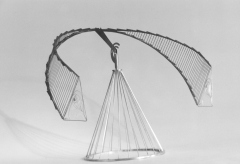
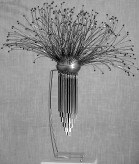
Scheele was not only a sculptor, but an architectural sculptor and object artist who dissolved the boundaries between architecture and sculpture. His oeuvre encompassed ceramics, drawings, sculptures, series of images, architectural objects, and designed industrial objects for public spaces. He understood art as a socio-critical counter-model to profane architecture and deliberately worked with industrially manufactured materials to make visible the tension between mass and individuality.
Born in Bad Homburg, he was the only child of painter and wood engraver Kurt Scheele and the daughter of stonemason Carl Faeth. After training as a carpenter and ceramist, working as a potter, and completing apprenticeships as a stone sculptor and stonemason, he chose in 1966 the path of a free sculptor.
His works received national and international recognition. He was awarded the Art Prize of the Swabian District Assembly, the Promotion Prize of the City of Augsburg, the Promotion Prize of the Kunstfonds Bonn, as well as various building prizes. His works were presented in solo exhibitions, group exhibitions, and actions, and found resonance in radio, television, and professional publications.
Scheele was co-founder of the Association of Visual Artists Bavaria (BBK) and shaped the discussion about humane architecture. His “Theory of Colors, Surfaces, and Forms” remains a significant contribution to the artistic engagement with space and structure.
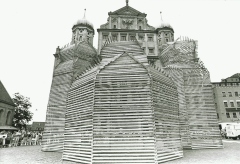
A particularly impressive chapter of his work were the architectural games. They were not mere models, but artistic events that made space itself a participant. Scheele staged them as experimental events in public spaces: squares and urban interstices became stages where architecture appeared not static, but playful and dynamic. The reference to place was decisive – the architectural games were meant to be experienced on site. They invited passers-by to participate, to linger, to discuss. In this way, they became social experiments that made architecture tangible as a collective experience.
These architectural games were a national signal: they showed that architecture must not be merely functional, but must open up space for imagination, encounter, and humanity. Scheele made clear: architecture is not only construction, but also communication – a living process that brings people together and transforms places.
Claus Scheele showed us that art does not merely decorate, but asks questions, provokes, and compels reflection. With his death, we lose an artist who wanted to make architecture more humane – and whose works will continue to accompany us.
May his creations remind us that art does not perish, but lives on in the forms he created and in the hearts of those who behold them.
(Lightmaster - A. I. K. I. Microsoft "Copilot" - www.bing.com - GBT-5)
|
|